
- 0
- 278 words
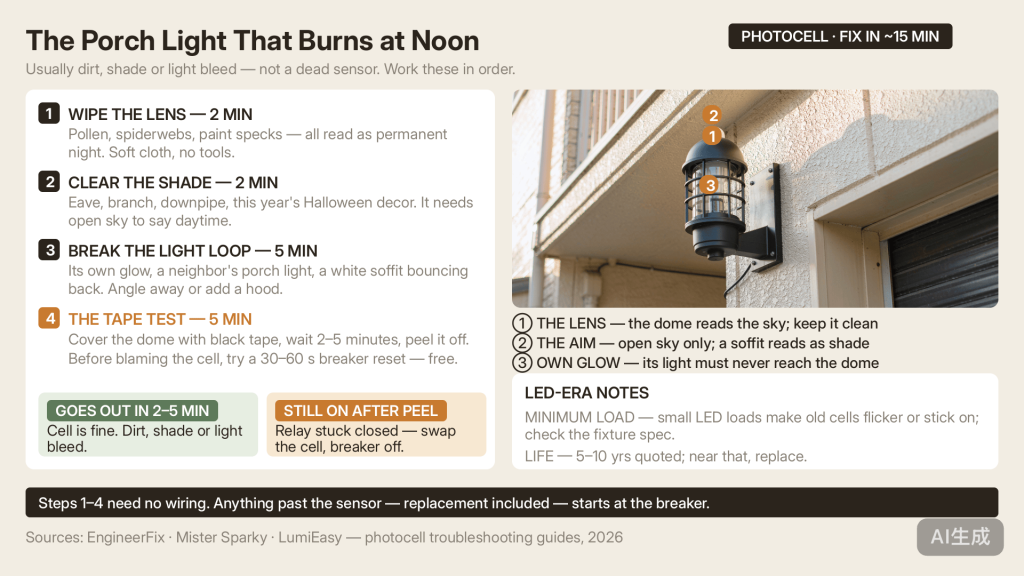
A dusk-to-dawn light burning at noon is the most common outdoor lighting complaint — and the fix is usually free. Work these four in order:
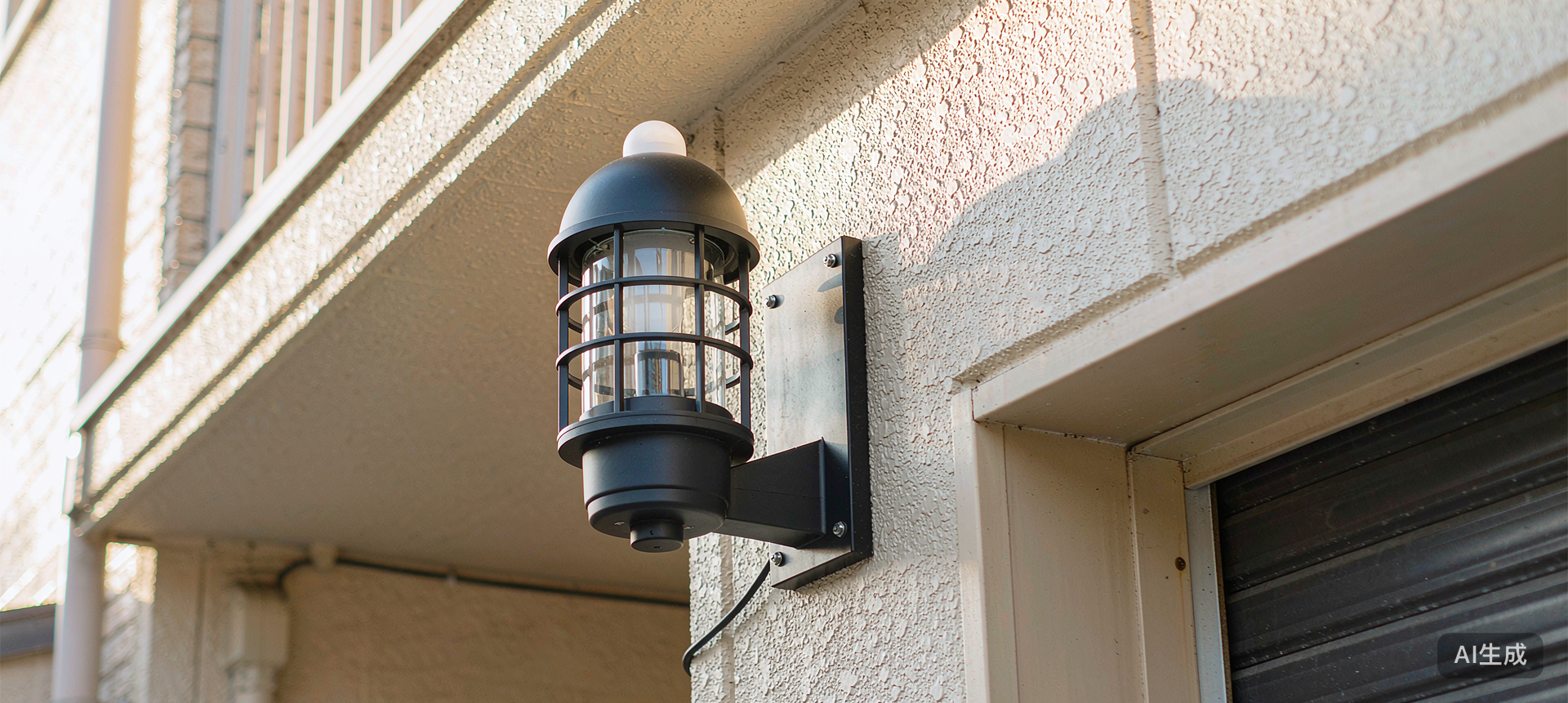
- Clean the sensor eye. Dirt, spiderwebs, paint specks, or a leaf shadow make the sensor read “night” all day. Wipe the little dome with a soft cloth — two minutes, and one of the most common fixes there is.
- Check what’s shading it. An eave, a tree branch, a downpipe, or this year’s Halloween decor can hold the sensor in permanent shadow. It needs a clear view of the sky to ever say “daytime.”
- Break the light loop. The fixture’s own glow — or a neighbor’s porch light, or a white wall bouncing it back — can convince the sensor it’s daytime. Some lights then cycle on-off-on all night. Angle the sensor away from light sources, or add a small hood.
- The 30-second tape test. Cover the sensor completely with black electrical tape. If the light switches on within a few minutes, the photocell works — your problem is dirt, shade, or light bleed (steps 1-3). If nothing happens, the sensor has likely failed, and photocells usually fail stuck-on.
Two LED-era notes: older photocell circuits were designed around 40-150W incandescent bulbs; an LED drawing 8-15W can be too small a load for some of them, causing flicker or always-on behavior — check the fixture’s minimum wattage, or swap in an LED-compatible photocell. And outdoor photocells are commonly quoted a 5-10 year service life; if yours is at the end of that range, replacement beats diagnosis.
Cleaning and taping involve no wiring. Anything past the sensor — replacement included — starts at the breaker.
作者

admin@exmaple.com
相关文章
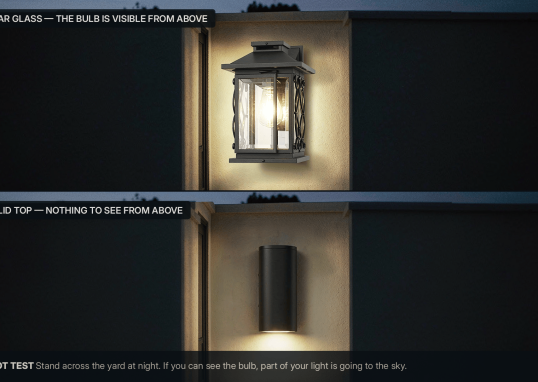
Dark Sky Outdoor Lighting: The 3 Specs That Matter (and the 10-Second Bulb Test)
Look at your porch lig...