
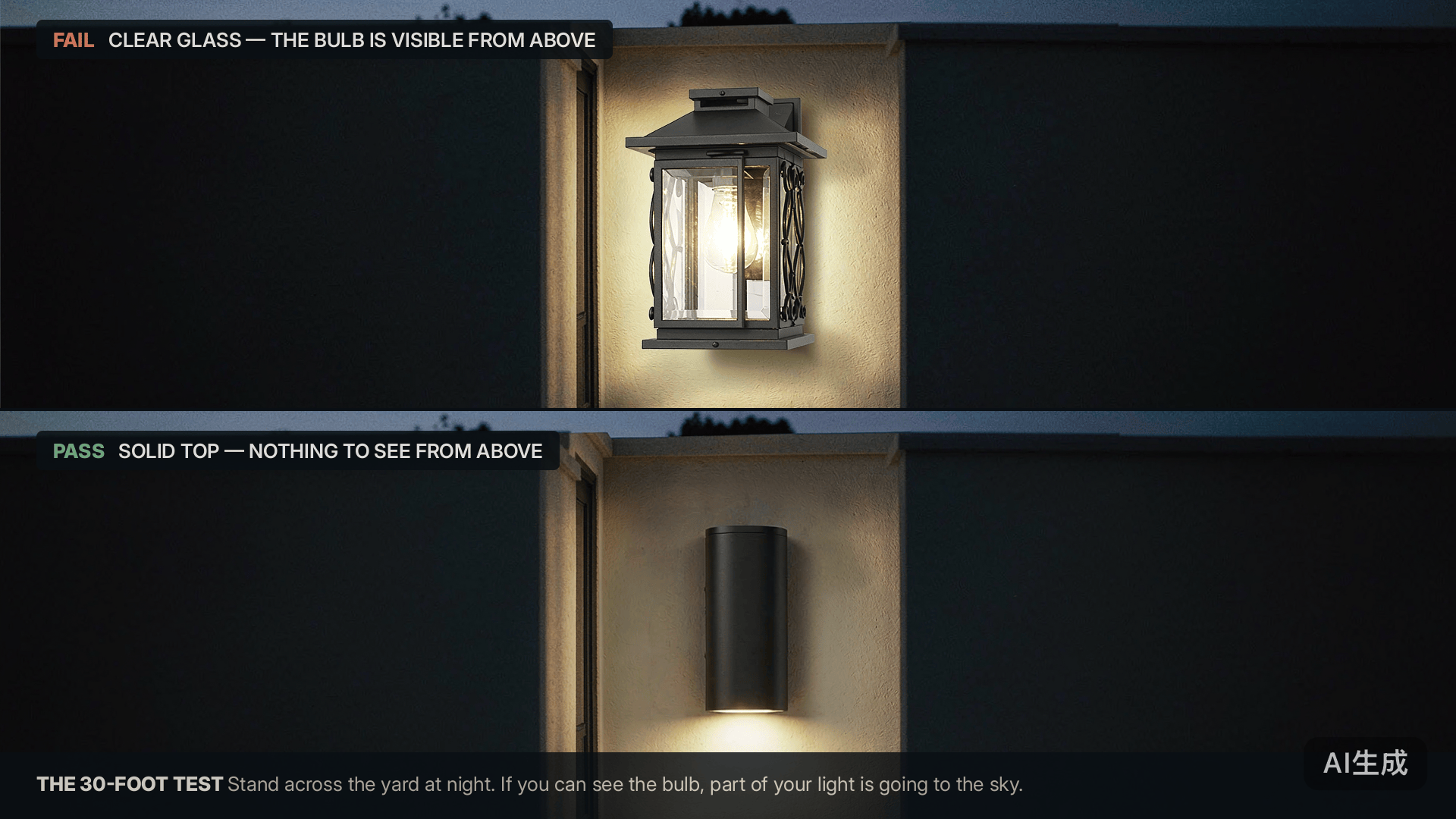
Look at your porch light from above at night. If you can see the bulb, part of your light is going to the sky instead of your steps.
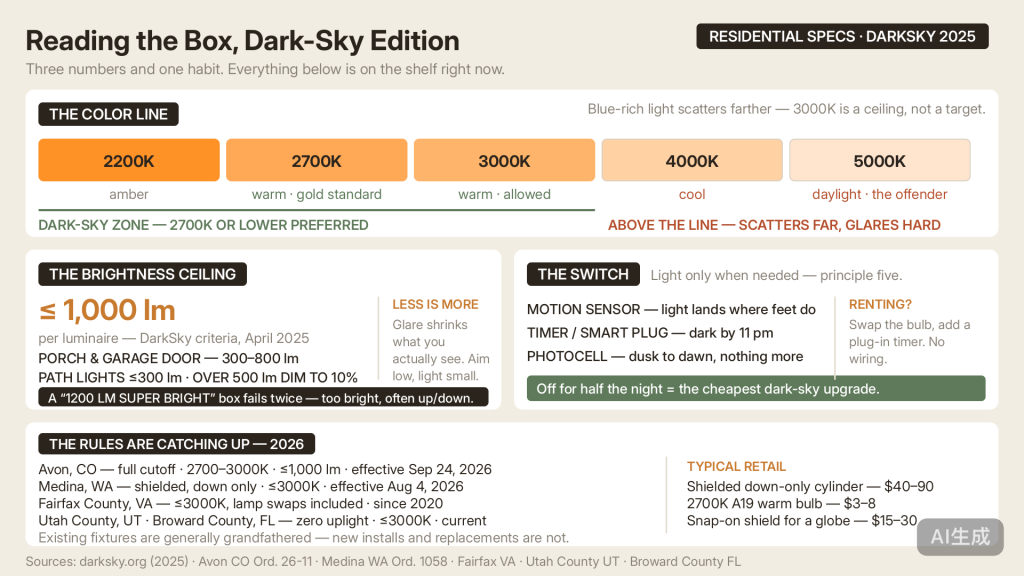
Dark-sky lighting has turned into a real buying category — fixtures carry a third-party “DarkSky Approved” seal, and some cities and counties now write outdoor lighting rules into local codes. The residential version comes down to three specs:
- Full cutoff: zero light above horizontal. A shielded fixture aims every lumen down — the industry measure is 0% upward light output ratio. A wall cylinder with a closed top does this; a lantern with clear glass panels on all sides doesn’t, however pretty. Check the top: solid cap = pass, visible glow = fail.
- 2700-3000K: warm white only. Blue-rich light scatters farther in the atmosphere, which is why dark-sky guidance caps outdoor color temperature at 3000K — 2700K is the gold standard. That 5000K “daylight” floodlight is the worst offender on the wall.
- Aim and dim. Light where feet land, not where eyes stare. Motion sensors, timers, or photocells beat all-night burning — a light that’s simply off for half the night is the cheapest dark-sky upgrade there is.
Typical US retail: shielded outdoor wall cylinders run roughly $25-80; if your fixture is already shielded, swapping to a warm 2700K LED bulb is a $3-10 fix.
The bonus nobody mentions: shielded warm light improves what you’re actually lighting — less glare in your eyes, better depth on the steps, and no more squinting across the fence.
作者

admin@exmaple.com
相关文章
Dusk to Dawn Light Stays On All Day: The 4-Cause Checklist (and the 30-Second Tape Test)
- 0
- 278 words
A dusk-to-dawn light b...