- 0
- 165 words
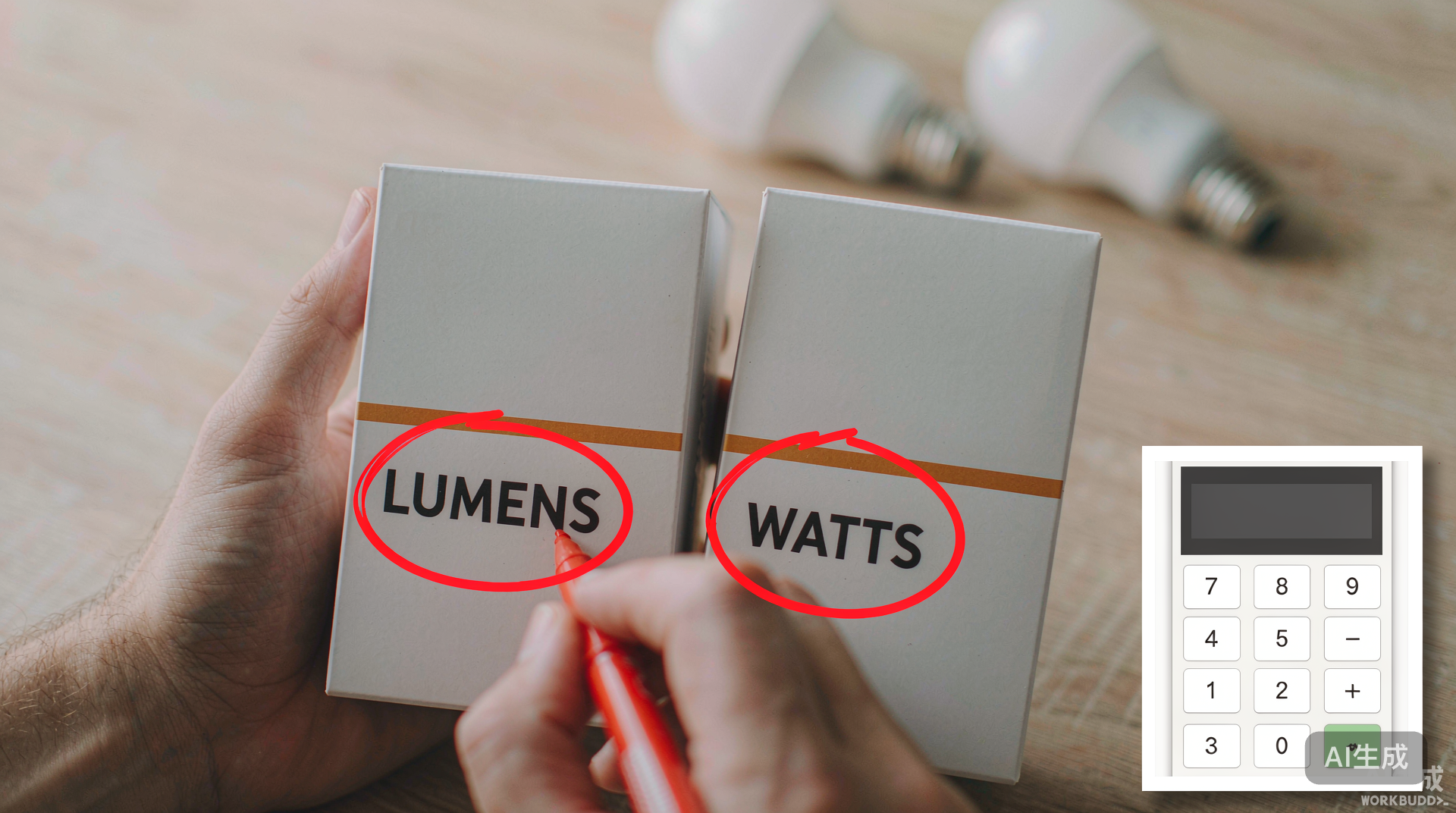
Watts tell you how much electricity a bulb eats. Lumens tell you how bright it actually is. Those are two different things, and American shelves have been selling you the wrong one for a decade.
Here’s the number almost nobody checks: lumens per watt.
The math takes 10 seconds in the aisle:
- 800 lumens ÷ 9W = 89 lm/W → fine
- 1,100 lumens ÷ 9W = 122 lm/W → this is the sweet spot
- 800 lumens ÷ 6W = 133 lm/W → excellent
Above 100 is good. Above 120 is future-proof.
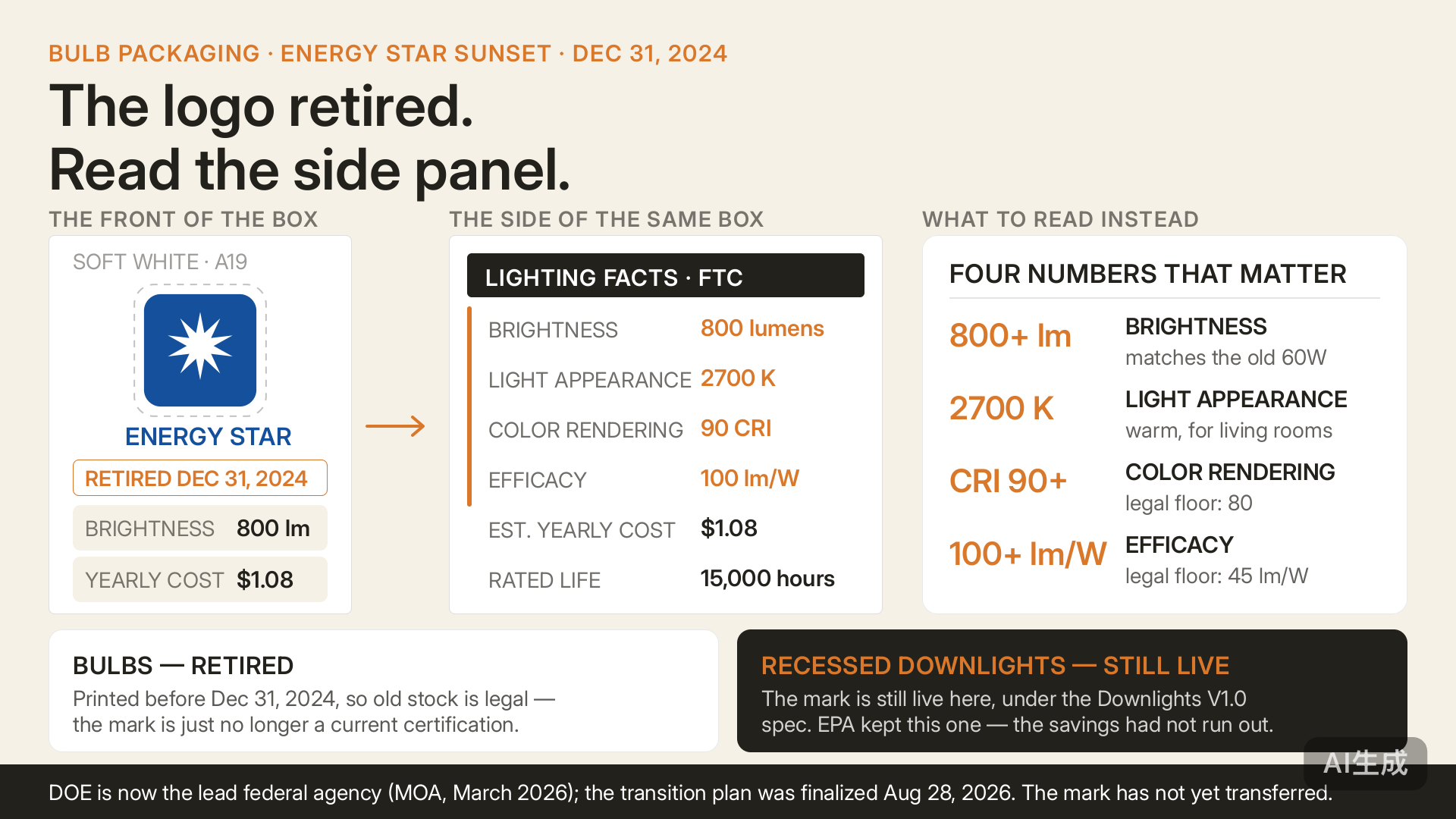
Why it matters now: the federal minimum for general service lamps already sits at 45 lm/W — that’s the line that pushed incandescent and halogen bulbs off US shelves. Regulators have pointed toward 120 lm/W as the next target for general service lamps, with published analyses describing a 2028 timeline. Whatever happens with the rule, 120 lm/W is a good buying filter today.
Practical version: ignore the wattage, divide the two numbers on the box. If a cheap 4-pack doesn’t print lm/W anywhere, that’s your answer.
作者

admin@exmaple.com
相关文章
Enclosed Fixture Rated LED Bulbs: What the Label Actually Means (and Where You Need It)
“Enclosed Fixture Rate...
How Long Do LED Bulbs Really Last? Reading the 25,000-Hour Label Correctly
"25,000 hours" isn't a...
CRI 80 vs 90: Where High-CRI Bulbs Are Worth It (And Where They’re Waste)
Your navy socks and yo...