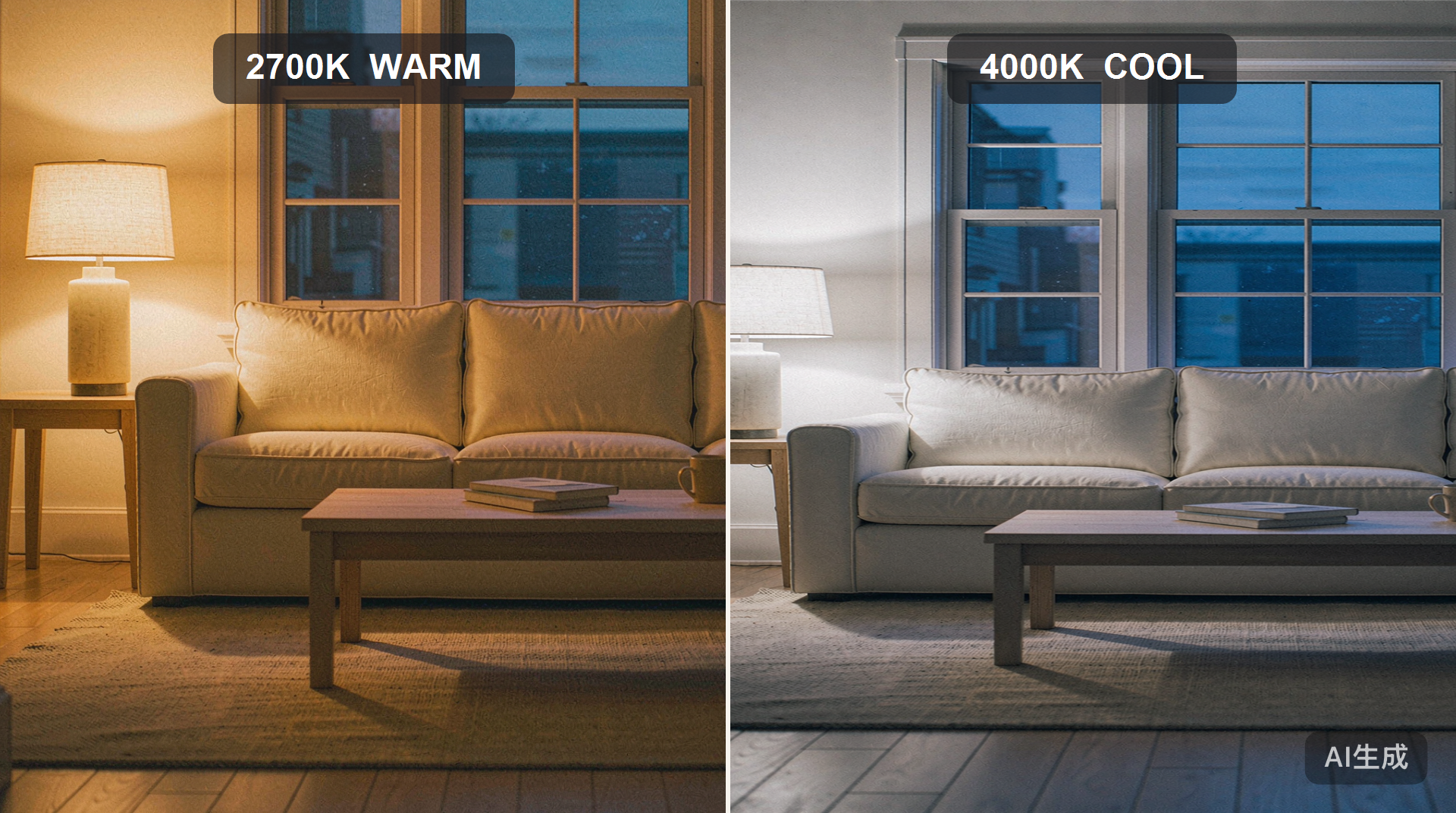
Tunable white and dim-to-warm are not the same feature. One follows your schedule; the other follows the dimmer. One question picks the right one for a room.
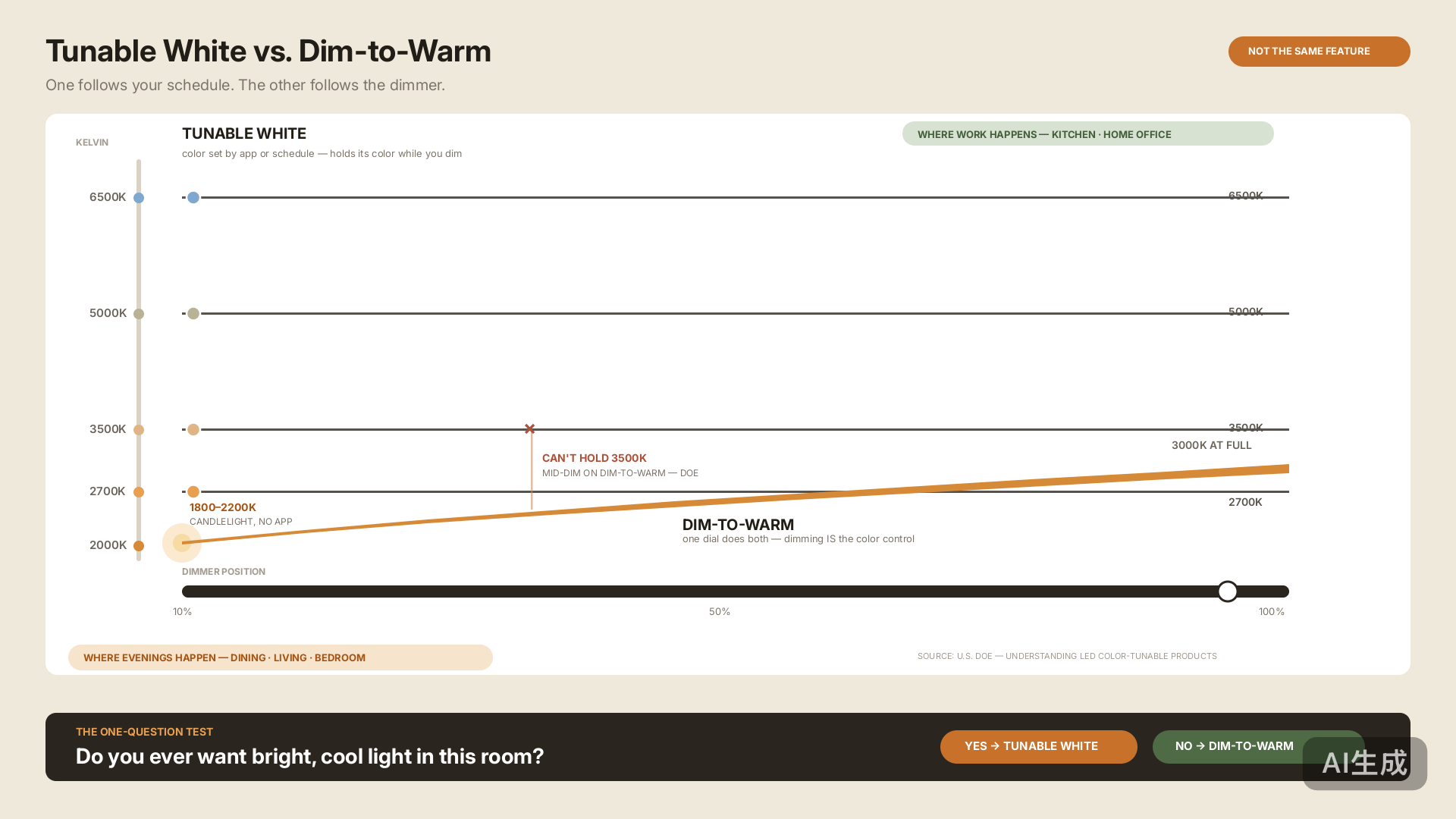
Tunable white sets color temperature and brightness independently — typically 2700K up to 6500K at any brightness level. It’s for rooms whose light has two jobs: a kitchen that wants 5000K for chopping and 2700K for dinner; a home office that wants a cool morning and a warm wind-down.
Dim-to-warm couples them. As you slide brightness down, the light slides warmer — from around 3000K toward 2000K — mimicking the way an incandescent bulb or a candle dims. You don’t control the color; you just dim. DOE’s own explainer puts it plainly: with dim-to-warm you can’t hold a mid tone and dim — dropping light level always warms the color. That’s a feature, not a bug, in the rooms where evenings end low and warm: dining rooms, living rooms, bedrooms.
The one-question test: do you ever want bright, cool light in this room?
Yes → tunable white.
No → dim-to-warm — at low settings it feels more natural than any tunable bulb, because the warm shift happens automatically, no app required.
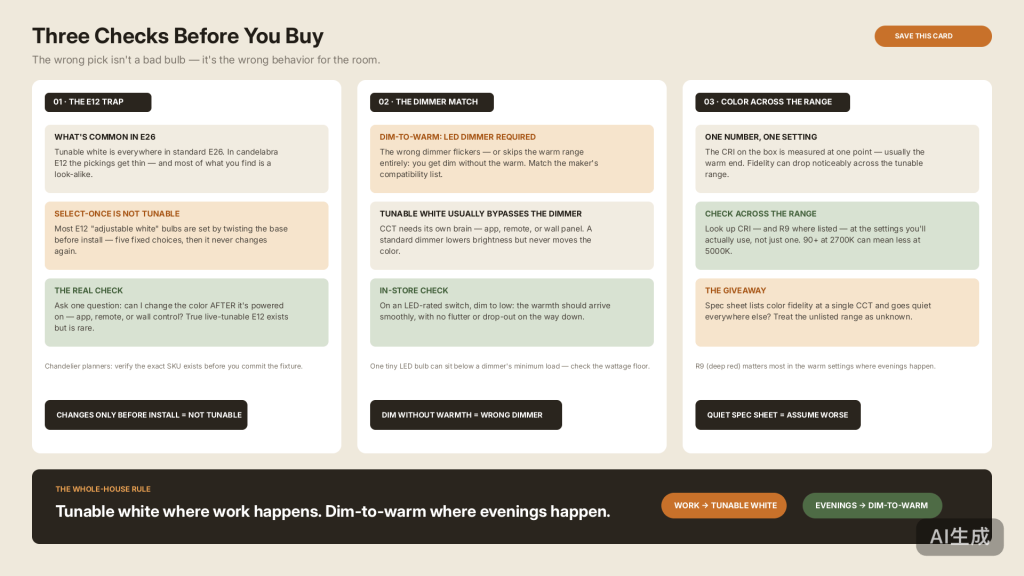
Three checks before buying:
- Base availability: tunable-white bulbs are common in standard E26 bases but thinner in E12 candelabra sizes — chandelier planners, verify the exact SKU exists first.
- Dimmer compatibility: dim-to-warm needs an LED-compatible dimmer; the wrong one causes flicker or skips the warm range.
- Color quality across the range: on some tunable bulbs, rated color fidelity can drop noticeably across the tunable range — check CRI specs across settings, not at one.
Whole-house rule of thumb: tunable white where work happens, dim-to-warm where evenings happen.
作者

admin@exmaple.com
相关文章
Cordless Table Lamps in 2026: How to Pick One That’s Actually Bright Enough
That warm glow on ever...
Keep the Vintage, Lose the Glare: The 2026 Rule for Edison-Style Lighting
The Edison bulb is the...