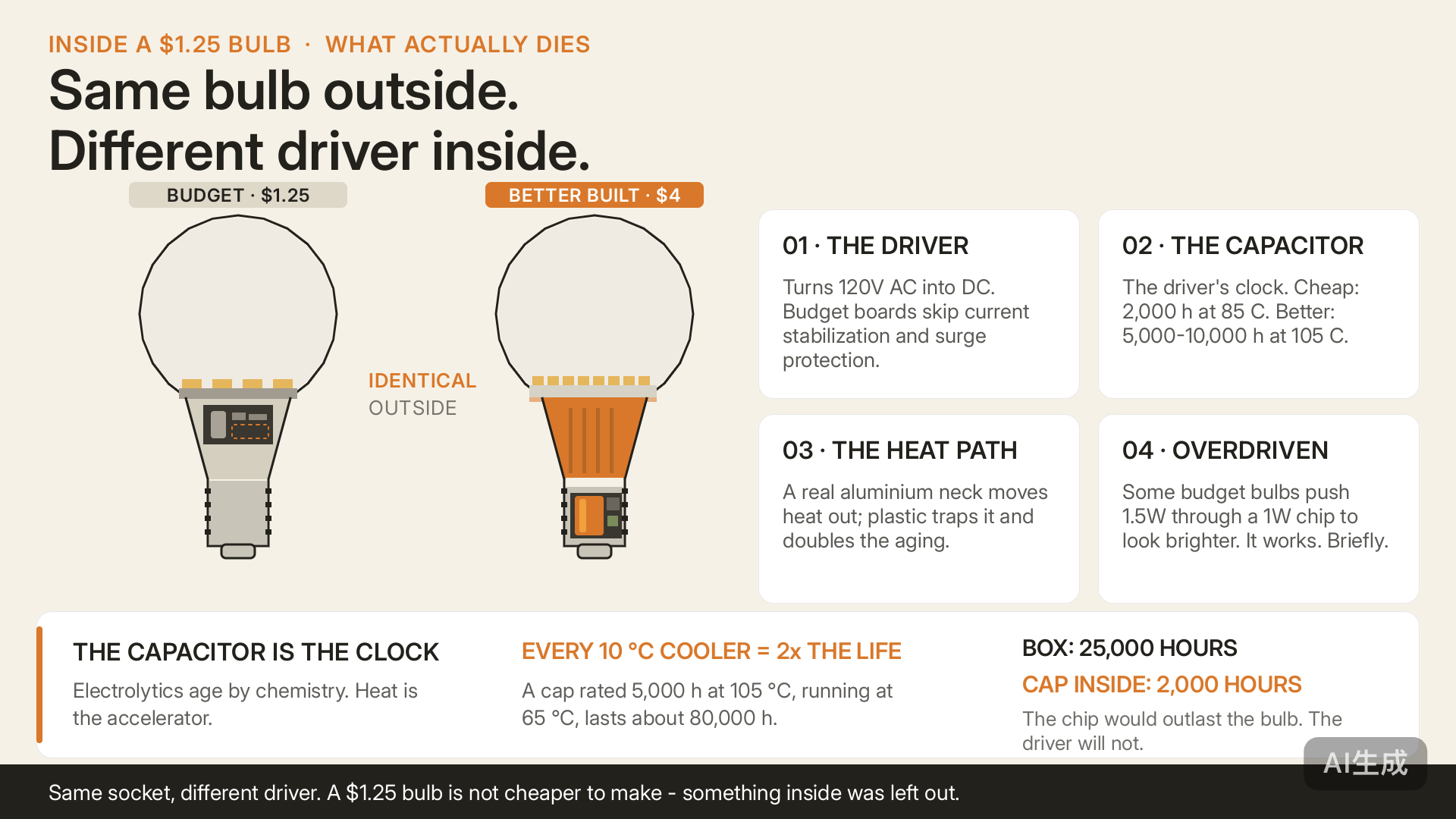
The LED chip in a $1.25 bulb will outlive the bulb. What dies first is the cheap driver around it.
When a no-name bulb burns out in a year, the LED itself almost never failed. The chip inside is a semiconductor that, kept cool, runs for decades. What dies first is the supporting cast — and that’s exactly where budget manufacturers cut cost:
- The driver. The little circuit that converts 120V AC to the DC current LEDs need. Budget versions skip surge protection and current stabilization.
- The capacitor. The driver’s weak point. Consumer-grade electrolytic capacitors are rated for a couple thousand hours at 185°F; commercial-grade parts are rated 5,000-10,000 hours at higher temperature. When the electrolyte dries out, the bulb flickers, then dies.
- The heat path. Thin aluminum (or just plastic) instead of a real heat sink. LED junctions above 185°F degrade fast — color shifts, brightness drops, electronics age at double speed.
- Overdriven chips. Some budget bulbs pump 1.5W through a chip rated for 1W to look brighter in the showroom. It works — briefly.
One 10-second test: point your phone camera at the bulb. Rolling dark bands across the screen mean a cheap, high-ripple driver. A smooth image means clean current. It’s not perfect, but it’s free.
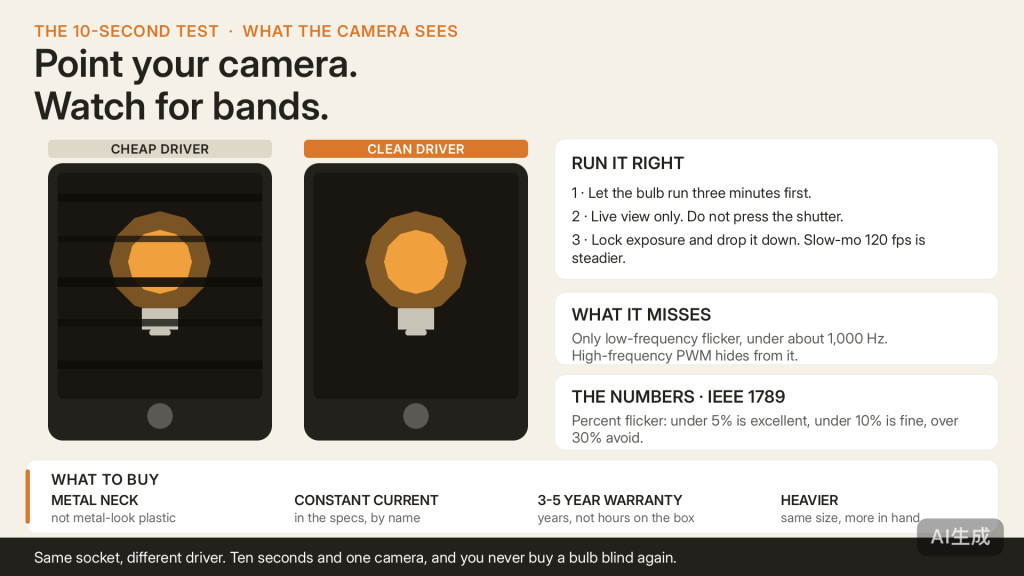
When you buy: metal base over plastic, “constant current driver” in the specs, and a longer warranty — a brand confident in its driver puts years on the warranty, not just hours on the box.
作者

admin@exmaple.com
相关文章