Daylight saving ends Sunday, Nov 1, 2026. Your dusk-to-dawn lights will handle it. Your timers won’t.
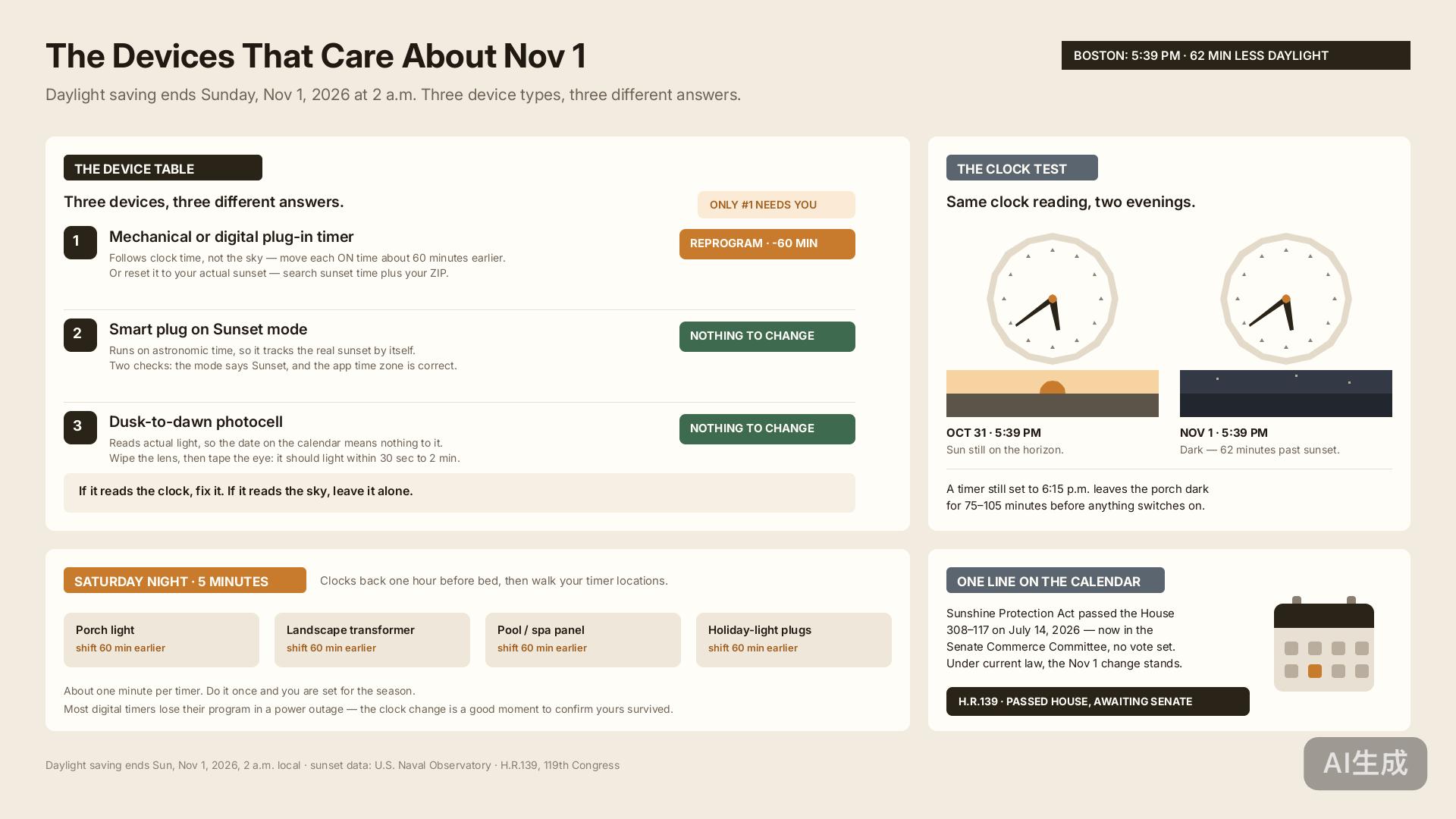
At 2 a.m. on Nov 1, clocks fall back one hour — and sunset lands an hour earlier by the clock. In much of the northern US, sunset drops to between 4:30 and 5:00 p.m. within the first two weeks of November. If your plug-in timer still says “on at 6:15,” your porch sits dark for 75-105 minutes every evening before anything switches on.
What actually needs your attention, by device:
Mechanical or digital plug-in timers → reprogram. They follow clock time, not the sky. Move each timer’s ON time about 60 minutes earlier — or reset it to your actual sunset time (search “sunset time” plus your ZIP code). About one minute per timer.
Smart plugs and apps on “sunset mode” → nothing to change. Astronomic schedules track real sunrise and sunset automatically. One check: confirm the schedule is set to Sunset, not to a fixed clock time someone typed in last year.
Dusk-to-dawn photocells → nothing to change. They read actual light levels, so the date on the calendar is irrelevant to them. But the time change is a natural reminder: wipe the sensor lens and run the 30-second tape test (cover the eye with black electrical tape; the light should switch on within a few minutes — most units add a built-in delay of up to about 5 minutes).
One line about the calendar itself: a bill to make daylight saving permanent passed the US House in July, but the Senate has not passed it — under current law, the November 1 change stands. Set the timers.
The Saturday-night checklist: wall clocks back one hour before bed, then walk your timer locations — porch, landscape transformer, pool/spa panel, holiday-light plugs — and shift each one 60 minutes earlier. Five minutes total, done for the season.
作者

admin@exmaple.com
相关文章
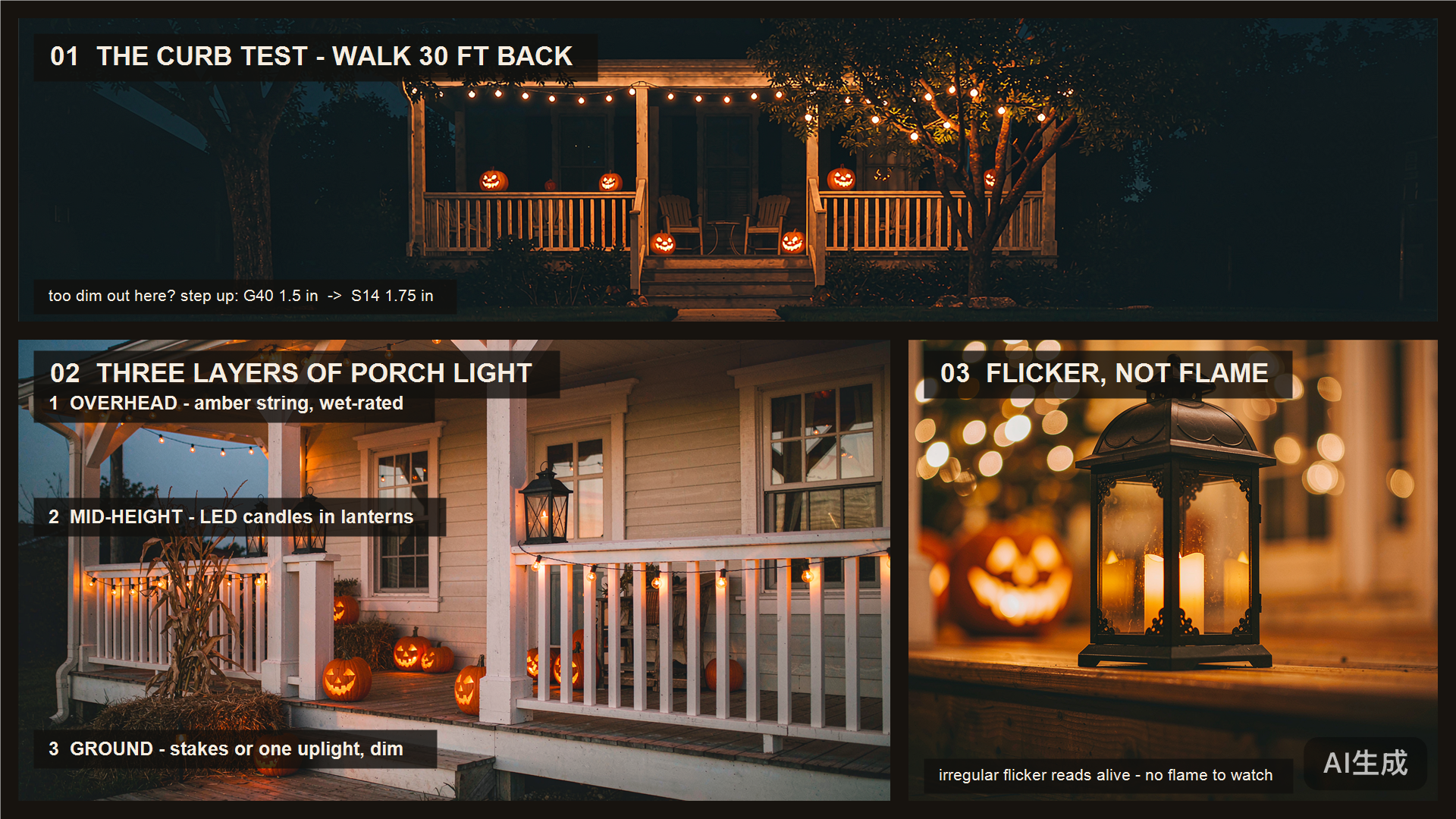
Halloween Porch Lighting: The 3-Zone Setup That Reads From the Street
Cool-white string ligh...